Masonry with Tradition
Veneer That Stays Attached Through Settlement
Stone Repairs in College Station for loose veneer panels, open joints, and failed anchoring systems
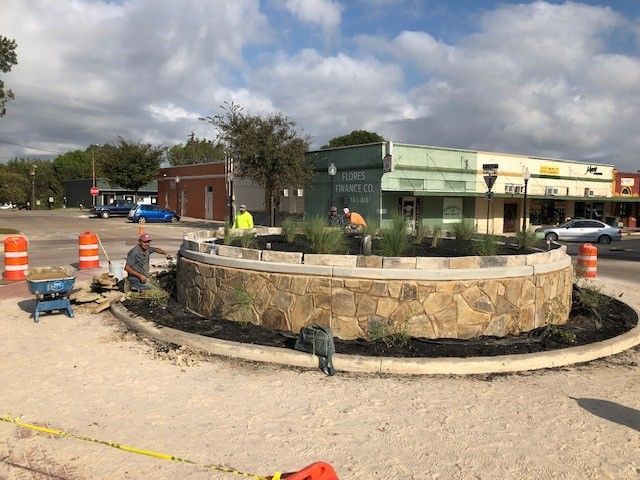
Stone veneer repairs become necessary when you notice individual stones moving independently from the wall, mortar joints opening to gaps wider than one-quarter inch, or water staining below stone sections after rainfall. The repair process involves more than refilling joints; it requires assessing whether the anchoring system still transfers loads properly and whether the underlying substrate remains stable enough to support the veneer. In the Bryan-College Station area, expansive clay soils create seasonal foundation movement that stresses stone veneer attachment points, making anchor inspection critical during repair assessments. Aggieland Masonry removes failed sections to inspect the concealed attachment hardware and substrate condition before reinstalling stone with upgraded corrosion-resistant anchors.
Stone repairs differ based on whether the installation used mortar-set full-bed methods or modern anchored veneer systems. Older mortar-set stone relies on the mortar itself to support the weight, while anchored systems use metal ties embedded in both the stone and the backing wall. When mortar-set stone begins detaching, repairs often require complete removal and reinstallation using mechanical anchors that reduce reliance on mortar bond alone. Thin veneer systems showing displacement typically suffer from corroded anchors or inadequate embedment depth during original installation.
Arrange an on-site consultation to determine whether stone movement indicates isolated mortar failure or systematic anchor deterioration requiring more extensive intervention.
What Changes After Stone Work Completes
Stone repair work includes drilling and installing stainless steel or hot-dipped galvanized anchors into the backing wall, setting stone units with mortar designed for natural stone's absorption characteristics, and tooling joints to shed water away from the stone faces. Natural stone requires mortar with lower compressive strength than brick or concrete block to prevent stress concentration at the mortar-stone interface. Repairs also address weep holes and drainage planes that allow water to exit from behind the veneer rather than accumulating and creating hydrostatic pressure.
After stone repairs finish curing, the veneer sits firmly against the backing without movement when pressed, joints appear uniform in width and depth, and water drains visibly from weep holes during the first rain following completion. The repaired stone should match surrounding sections in plane and alignment, with no individual units projecting or receding noticeably. Aggieland Masonry verifies that anchor embedment meets current building code minimums even when repairing older installations built to previous standards, providing increased resistance to wind loads and seismic movement.
Stone veneer repairs sometimes reveal that the water-resistive barrier behind the stone has deteriorated, requiring installation of new moisture protection before stone reinstallation. This adds cost but prevents recurring failure from water damage to the substrate. Limestone and sandstone repairs may include application of consolidants that stabilize deteriorated stone surfaces without altering appearance.
Answers to Frequent Service Questions
Stone veneer systems behave differently than solid masonry walls, and repair approaches account for these functional differences.
What causes natural stone to crack when surrounding stones remain intact?
Individual stone cracking results from pre-existing flaws in the material, inadequate support along the bottom edge, or point loads from improperly positioned anchors that concentrate stress rather than distributing it across the stone back.
How do repairs account for different stone types in the same wall?
Limestone, sandstone, and granite each have distinct absorption rates and thermal expansion properties, requiring different mortar mixes and joint widths to accommodate movement without creating stress cracks at the interfaces between stone types.
When should loose stone be removed immediately versus monitored?
Any stone that moves more than one-eighth inch when pressed or shows gaps on three or more edges requires immediate removal and reinstallation, as further loosening can lead to sudden detachment and safety hazards.
Why do some stone repairs in College Station require upgraded flashing even when the original installation had none?
Building codes have evolved to mandate flashing above all openings and at wall terminations, and adding this protection during repairs prevents water infiltration that accelerates future deterioration.
What maintenance helps stone veneer last between major repairs?
Annual inspection of joint condition, prompt repointing when joints recede beyond one-quarter inch depth, and maintaining proper grade and drainage at the wall base minimize water infiltration that causes most stone veneer failures.
Stone veneer repairs performed by Aggieland Masonry include documentation of existing anchor locations and upgraded attachment methods that exceed the original installation standards. Request a property evaluation to assess the current condition of stone attachment systems and receive a scope of work based on observed failure patterns.